https://x.com/bryan_johnson/status/1881486398722834695
OpenAI's GPT-4b micro model could be uniquely helpful for longevity-related discoveries by creating proteins to rejuvenate normal cells into stem cells.
We are the first generation to have a realistic shot at prolonged healthy life given advances in AI.
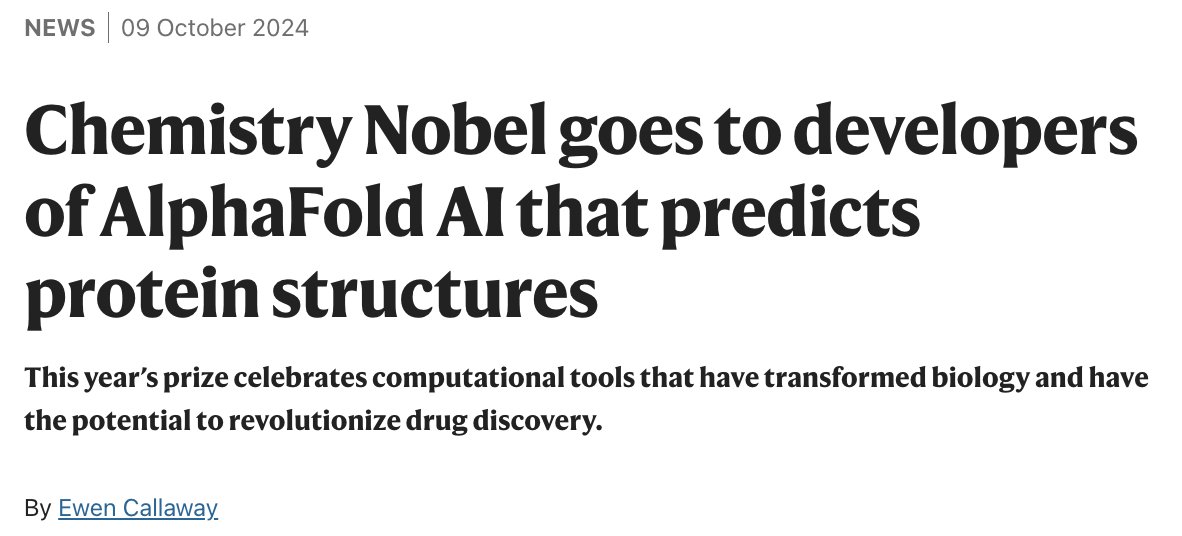
@GoogleDeepMind built AlphaFold and solved the largest problem in biology; the prediction of a protein folding and 3D structure based on its amino-acid sequence.
For which it won the Noble prize in chemistry last October 2024, and showed that A human/AI combination was able to solve problems untenable to the human mind or classical computation.
The prediction of protein folding coupled with the advancement of generative AI means that we can now go beyond predicting and merely tweaking existing proteins, to completely rearranging proteins and envisioning novel completely synthetic proteins.
This is the primary goal of the new GPT-4b model, using the power of AI to generate proteins that can trigger the reprogramming of normal cells into stem cells, much needed to regenerate, maintain, and enhance our tissues and organs as we age.
The model is a collaboration between OpenAI and RetroBiosciences, which is using the model to create synthetic alternative proteins to the famous Yamanaka factors, the first cell reprogramming proteins to be discovered.
I am very optimistic about Don't Die being exceedingly embraced by the wider Silicon Valley community.
Wishing @GoogleDeepMind @OpenAI, @RetroBio_ all the best in making rapid progress towards making Longevity Escape Velocity real.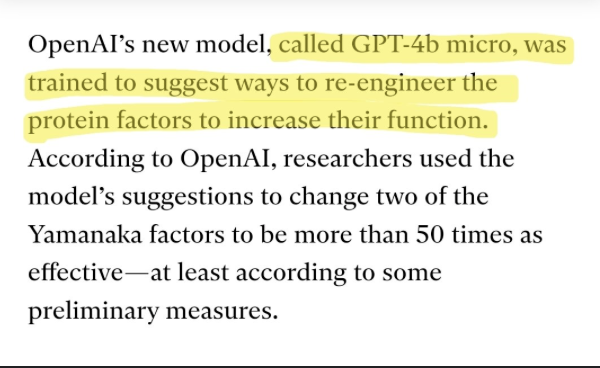 Jan 20, 2025 View on X →
Monday, January 20, 2025